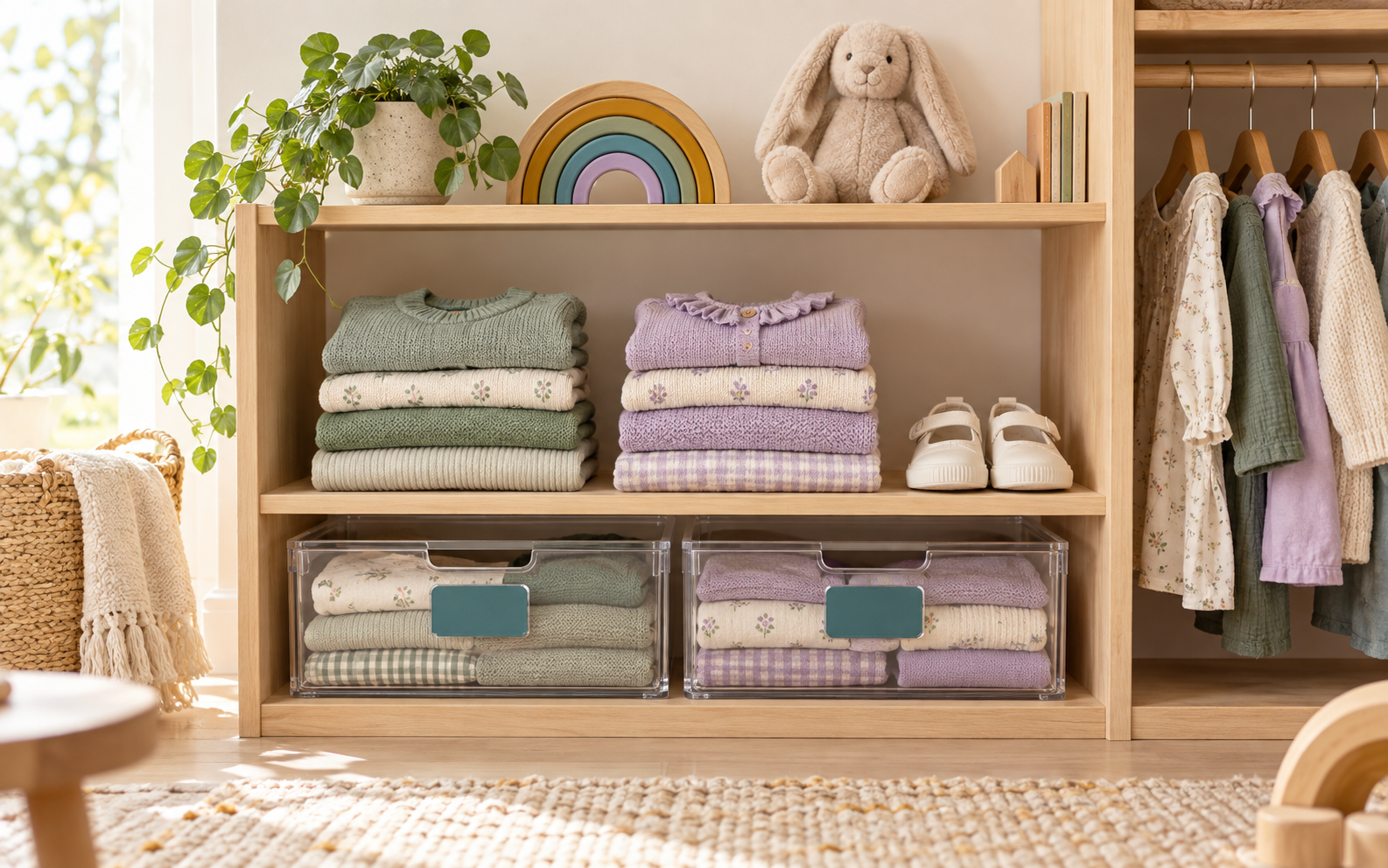
Make three groups
Start with one small drawer: worn now, to grow into and outgrown. Set repairs and items to check aside. Do not rely on the label alone, since sizes vary between brands. Add a note if an item runs small or fits differently from others in the same size.
One box, one size and season
Group spare clothing by size and intended season. ‘Size 110 — summer’ is more helpful than ‘Children's clothes’. Avoid mixing many sizes. For a small collection, use separate labelled bags inside one container. The important thing is to distinguish the groups easily next time.
Photograph items that are easy to forget
Take individual photos of jackets, shoes and outfits. Record size, season and condition when useful; identical socks do not all need detailed descriptions. In My Stuff, use a virtual box named like the real container. Before buying another jacket, check whether a suitable one is already waiting on the top shelf.
Group toys by activity
Names such as ‘Drawing’, ‘Building blocks’ or ‘Cars’ work well. Keep frequently used toys accessible and spare sets separately. If your child helps tidy up, use a simple picture or understandable label. The app can help adults track stored items, while everyday tidying should remain clear without a phone.
Review before the next season
Check stored clothes before a change of season. Move items that now fit into the current wardrobe and update their location. Decide whether to keep, give away or sell outgrown items; do not leave this group unresolved indefinitely. Start with one size or drawer. A clear view of what you have can prevent duplicate purchases.
Your checklist
Tick off the steps you have completed